
Will My Seat Change If the Price Drops? What Happens to Seats, Bags, and Add‑Ons
- Refare Team
- Feb 10
- 7 min read
TL;DR
When flight prices drop after booking, what happens to your carefully selected window seat or that extra baggage you paid for? The short answer: it depends on the method. Traditional rebooking processes may require you to reselect seats and re-add paid services.
But here's the good news: with the right approach (like Refare's automatic negotiation with airline partners), your seat, cabin, bags, and add-ons typically stay exactly where you want them, same flight, same seat, just a lower price. We'll walk you through what stays protected, what edge cases exist, and how to safeguard your seating preferences when chasing savings.
You finally scored the perfect seat. Window on the left side for those sunrise views over the Rockies. You paid extra for priority boarding and checked bag coverage. Your trip is exactly how you want it.
Then the price drops by $150.
Your first thought? "If I claim this refund, will I lose my seat?"
It's the question that stops travelers from pursuing legitimate savings. You've invested time (and sometimes money) curating your flight experience. The fear of starting over, re-selecting seats, or worse, ending up in a middle seat near the lavatory, feels like too high a price for a few bucks back.
Here's what actually happens to your seats, bags, and add-ons when prices drop post-booking, plus how to protect what matters most.
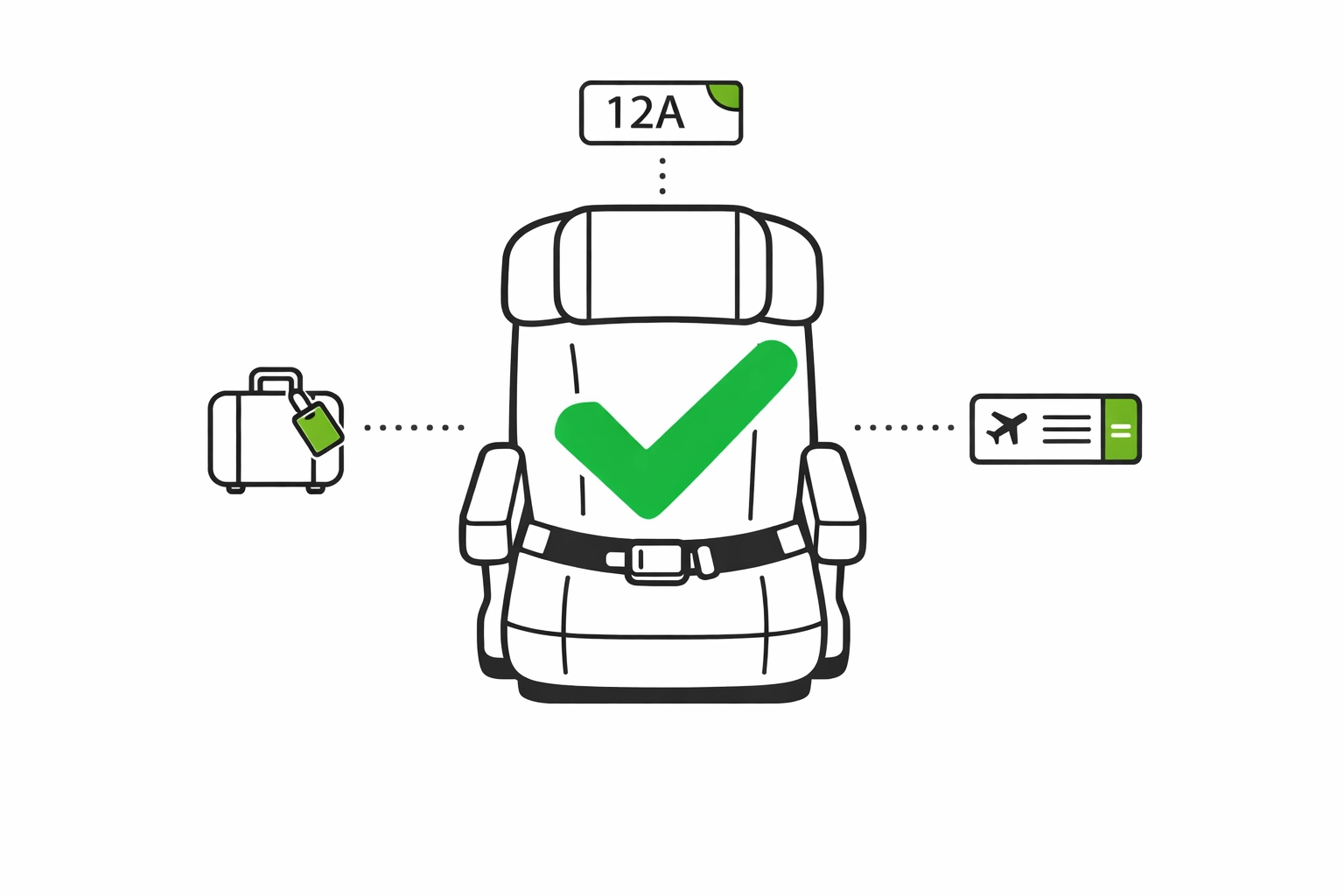
What Typically Stays the Same (the Good News)
Let's start with the reassuring part. When you're dealing with same-flight price adjustments, meaning the airline credits you for a fare drop without requiring a full cancellation and rebooking, most of your trip details remain intact:
Your seat assignment usually stays put. If the airline is simply issuing a refund or travel credit for the fare difference, your seat selection doesn't get touched. You're not changing flights, departure times, or routing, just the price you paid.
Your cabin class stays the same. Economy stays economy. If you booked Premium Economy or Business, that doesn't change either. Airlines aren't downgrading you as part of a price-drop refund.
Your confirmation number (PNR) typically remains active. You're not creating a brand-new booking; you're adjusting the financial terms of an existing reservation.
Paid add-ons like checked bags, seat upgrades, and priority boarding usually transfer. If these were purchased as part of your original fare or added to your PNR, they generally stay attached to your reservation.
The key phrase here is "price adjustment" versus "cancel-and-rebook." The former protects your trip details. The latter? That's where things get messy.
When Things Can Change (the Edge Cases)
Not all price-drop claims work the same way. Depending on the airline, the tool you use, or the specific fare rules, here are scenarios where your seat or add-ons might be at risk:
1) Full Cancel-and-Rebook Flows
Some services (or DIY manual rebooking) require you to cancel your original ticket entirely and create a fresh booking at the lower fare. When this happens:
Your seat selection resets. You'll need to choose seats again during the rebooking process, and your original seat may no longer be available (especially if it was a limited "preferred" seat that's now taken).
Paid seat fees may not auto-transfer. If you paid $35 for an extra-legroom seat, that charge might not automatically apply to the new PNR. You could need to repurchase it.
Checked bag fees and other ancillaries require re-addition. The new booking won't "remember" your add-ons unless you manually select them again (and pay again if not included in the new fare).
This is frustrating, time-consuming, and sometimes leads to worse seating than you had before, especially on full flights.
2) Fare Class Letter Changes
Even when the flight, seat, and cabin stay the same, the fare class letter (the code that determines upgrade eligibility and fare rules) can change if the lower-priced ticket is in a different booking class.
For example: you originally booked in fare class "Y" (full-fare economy), and the price drop is in fare class "M" (discounted economy). If the repricing moves you to class M:
Your physical seat and cabin don't change (still economy, still 14A).
But your upgrade priority or flexibility might shift slightly, depending on the airline's policies.
For most leisure travelers, this is invisible. For frequent flyers chasing upgrade priority or elite qualifying credits, it's worth understanding.
3) Split Reservations or Group Bookings
If you booked multiple passengers on one reservation, and only some passengers qualify for the price drop refund (due to fare rules or ticket type), the airline may need to split the PNR. When this happens:
Seat assignments can get reshuffled, especially if the original seats were assigned as a group block.
You may need to contact the airline to manually re-link seats or request adjacent seating.

How Refare Handles It Differently (the Effortless Path)
Here's where Refare's approach avoids most of these headaches. Unlike tools that force you into a cancel-and-rebook loop or simply send you an alert and leave the work to you, Refare negotiates directly with airline partners to secure price adjustments on your existing reservation.
What does that mean for your seat and add-ons?
✅ Same flight, same seat, same cabin. Because we're working within your existing booking (not canceling and creating a new one), your seat assignment stays exactly where you left it.
✅ Your baggage allowance and paid add-ons remain intact. If you purchased seats, bags, or priority boarding as part of your original PNR, those don't get stripped away or require re-purchasing.
✅ Your frequent flyer number stays attached. You're still earning miles and elite-qualifying credit on the original booking, just at a refunded price. (Hello, Loyalty Double-Dip: you save money and keep your status perks.)
✅ Credits land in your airline loyalty account (when supported). Instead of generic airline credits that are hard to track, Refare's partnerships with major carriers mean savings often flow directly to your frequent flyer wallet, ready to use on future flights.
The goal isn't just to get you a refund. It's to get you a refund without disrupting the trip you planned.
Practical Tips to Protect Your Seat When Chasing Savings
Even with a hands-off service like Refare, here are smart habits to safeguard your seating and add-ons:
1) Screenshot your original seat map and confirmation details
Before pursuing any price-drop claim (whether automated or manual), take screenshots of:
Your seat assignments (with row/seat numbers visible)
Your paid add-ons (checked bags, seat fees, etc.)
Your original confirmation email
If something does go sideways during repricing, you'll have documentation to show the airline what you originally purchased.
2) Book seats early (especially on full flights)
The earlier you select your seat after booking, the better your chances of keeping it, even in rare edge cases. Preferred seats with extra legroom or favorable positions (bulkhead, exit row) fill up fast. Lock yours in as soon as your booking is confirmed.
3) Avoid Basic Economy if seat selection matters to you
Basic Economy fares on most U.S. carriers don't allow advance seat selection (you're assigned at check-in). If you care about where you sit, book Main Cabin or higher. And keep in mind: Basic Economy tickets often aren't eligible for post-booking price adjustments due to restrictive fare rules.
4) Use services that preserve your existing PNR
If you're hunting for price drops manually or using third-party tools, ask: "Will this require canceling and rebooking, or is it a fare adjustment on my existing reservation?" The latter is always preferable for keeping seats and add-ons intact.
5) Check in exactly 24 hours before departure (as backup)
Even if your seat is "assigned," airlines can technically move passengers for operational reasons (aircraft swaps, overselling, etc.). Checking in right at the 24-hour mark locks in your boarding position and reduces the chance of involuntary changes.
What About Bags, Wi-Fi, and Other Add-Ons?
Let's quickly address the other paid extras beyond seats:
Checked baggage fees: If you paid for checked bags as part of your original booking (or they're included in your fare type like on premium cabin tickets), those entitlements carry over in a price-adjustment scenario. If you're doing a full cancel-and-rebook, you'll need to re-add baggage, so choose your repricing method carefully.
In-flight Wi-Fi or entertainment purchases: These are typically tied to your flight date and passenger name, not your PNR. If your flight number and travel date stay the same (which they do in price-adjustment scenarios), your Wi-Fi pass should still work. If you cancel and rebook onto a technically "different" flight reservation, you may need to repurchase.
Seat upgrades (like extra legroom or preferred seating): In a true fare-adjustment model, these stay attached. In a cancel-and-rebook, you'll need to buy them again, and they may no longer be available at the same price (or at all, if inventory is gone).
Priority boarding or early check-in: These perks are usually linked to your fare type or loyalty status. If your new fare type includes them (or your status grants them automatically), you're good. If the lower fare is a more restrictive class that doesn't include priority boarding, you might lose that perk, but you're also saving money on the base fare, so it's a tradeoff.

The Bottom Line: Your Seat (Probably) Isn't Going Anywhere
Here's the real takeaway: with the right approach, you don't have to choose between savings and your preferred seat.
If you're doing a traditional cancel-and-rebook yourself, yes: your seat is at risk, and you'll likely spend 20+ minutes re-selecting everything and hoping your original spot is still available. But modern price-adjustment tools (especially ones with direct airline partnerships, like Refare) are designed to secure refunds without touching your seat map, cabin class, or paid add-ons.
Your window seat stays a window seat. Your extra legroom stays extra legroom. Your checked bags stay checked. You just pay less for all of it.
And when savings flow directly into your frequent flyer account: keeping your miles, your elite status progress, and your travel credits organized in one place: you're not just saving money. You're traveling smarter, with zero hassle and full peace of mind.
So go ahead and chase that price drop. Your 14A window seat isn't going anywhere.
Bottom Line
Your seat, bags, and add-ons are safest when price-drop refunds happen via fare adjustment (not full cancellation). Services that negotiate directly with airline partners: like Refare: preserve your existing reservation details, so you keep your carefully chosen seat, your paid extras, and your frequent flyer perks. For DIY rebookers, expect to reselect seats and re-add ancillaries, often at higher prices or worse availability. The smartest move? Let automation handle the refund while your trip stays exactly as planned: same flight, same seat, just more money in your pocket (or loyalty account). Happy travels!
Ready to save on your next flight without losing your favorite seat?
Let Refare monitor your booking and negotiate price drops automatically: so you can focus on packing, not repricing.
