
Your Flight Price Dropped After Booking: Now What? 5 Steps to Get Your Money Back
- Refare Team
- Feb 13
- 5 min read
TL;DR: When your flight price dropped after booking, you might be entitled to a refund or travel credit. The key is acting fast, knowing your airline's policy, and understanding your options. Or, skip the hassle entirely and let Refare handle everything automatically. We monitor prices, negotiate with airlines, and deposit savings directly into your frequent flyer account. No work required on your end.
That Sinking Feeling When You Spot a Lower Price
You did everything right. You compared flights, picked the best deal, and clicked "Book Now" with confidence. Then, a few days later, you casually check the price again and... wait. Is that $87 less than what you paid?
Cue the frustration.
Seeing your flight price dropped after booking is one of the most annoying experiences in travel. It feels like the universe is playing a cruel joke on you. You did your research! You thought you got a good deal! And now someone booking the exact same flight gets to pay less?
Here's the thing: this happens all the time. Airline prices fluctuate constantly based on demand, time of day, competition, and about a dozen other factors that seem totally random. The price you pay today might not be the price tomorrow. Or next week. Or even three hours from now.
The good news? You don't have to just accept it. There are ways to get your money back when prices drop. Let's walk through exactly what to do.
Why Most Travelers Miss Out on Refunds
Before we dive into the steps, let's talk about why most people never recover a dime when their flight price drops.
They simply don't know prices changed. Unless you're obsessively refreshing your airline's website (and who has time for that?), you probably won't notice a price drop. By the time you accidentally discover it, weeks or months might have passed. The window to act could already be closed.
They assume nothing can be done. Many travelers believe that once you book, you're locked in. That's not always true! Airlines have various policies for price adjustments, rebooking, and refunds. You just need to know where to look.
The process feels overwhelming. Even when people know a refund might be possible, the thought of calling the airline, waiting on hold, and navigating complicated policies sounds exhausting. So they let it go.
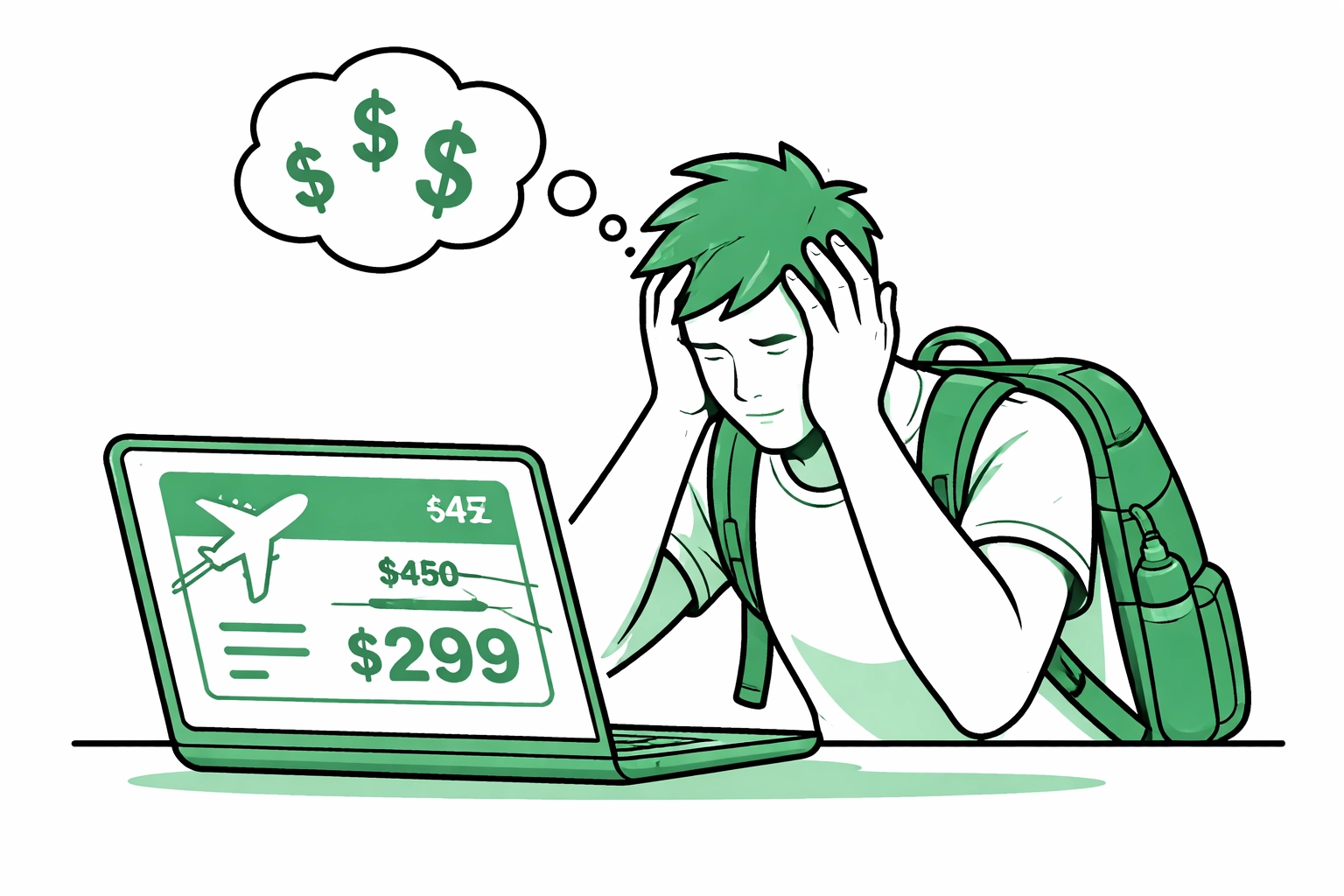
They don't have time to monitor prices manually. Life is busy. Between work, family, and everything else, manually tracking your flight's price every day until departure just isn't realistic. This is exactly why airline ticket price monitoring tools exist. But more on that in a minute.
The result? Billions of dollars in potential savings go unclaimed every year. Let's make sure you're not leaving money on the table.
5 Steps to Get Your Money Back After a Price Drop
Step 1: Check If You're Still in the 24-Hour Window
Here's a little-known rule that can save you big: if you booked a flight to, from, or within the United States, you have 24 hours to cancel without penalty. This applies to any airline, as long as you booked at least seven days before departure.
If your flight price dropped within that first day, here's what to do:
Book the new, lower-priced ticket first (to secure your seat)
Cancel your original booking for a full refund
Celebrate your savings 🎉
This 24-hour rule is your best friend for immediate price drops. But what if you're past that window?
Step 2: Know Your Airline's Price Adjustment Policy
After the 24-hour grace period, your options depend heavily on which airline you booked and what type of fare you purchased.
Some airlines are more generous than others:
Southwest is famous for its flexibility. You can reprice your existing reservation without fees, and any difference gets applied as travel credit.
Alaska Airlines offers a price guarantee. If you find the same flight for at least $10 less within 24 hours of booking, they'll refund the difference.
For carriers like Delta, American, United, Emirates, KLM, Lufthansa, and Spirit, policies vary by fare class. Main cabin and higher fares often allow changes with credits issued. Basic economy? Usually not so flexible.
The key is to check your specific airline's policy before assuming you're stuck.
Step 3: Calculate If Rebooking Makes Financial Sense
Sometimes the math just doesn't work out. If your airline charges a change fee and the price drop is small, you might actually lose money by rebooking.
Here's a quick way to think about it:
Price drop amount minus change fees equals actual savings
If actual savings is positive, rebooking makes sense
If it's negative or barely breaks even, it's probably not worth the hassle
For example, if your flight dropped by $150 and the change fee is $75, you'd pocket $75 in savings. Worth it! But if the drop is only $50 with a $75 fee? Skip it.
Step 4: Contact the Airline (or Use a Shortcut)
If you've determined that rebooking makes sense, your next step is to contact the airline. You can usually do this through:
Their website or app (look for "Manage My Booking")
Customer service phone line
Social media (sometimes faster than calling!)
Be polite, explain that you noticed a price drop, and ask about your options for a refund, credit, or rebooking at the lower fare.
Here's a pro tip: if your flight schedule changed even slightly since you booked, you may have additional leverage to request a fee waiver.
Step 5: Apply Your Refund or Credit
Depending on your airline and fare type, your savings might come in different forms:
Cash refund to your original payment method (best case scenario)
Travel credit for future bookings, usually valid for 90 days to one year
Flight credit that can sometimes be applied to baggage fees or seat upgrades
Make sure you understand the terms of your credit so it doesn't expire unused!
The Easier Way: Let Refare Handle Everything
Now, here's the honest truth: most people won't follow all five of those steps. Not because they don't want the savings, but because life gets in the way. Who has time to monitor prices, research policies, calculate fees, and sit on hold with customer service?
That's exactly why we built Refare.
Here's how to get notified when flight prices drop without lifting a finger:
Submit your flight itinerary to Refare
We automatically monitor your booking for price drops
When we spot savings, we negotiate directly with the airline on your behalf
Your refund gets deposited straight into your frequent flyer account
That's it. No phone calls. No policy research. No spreadsheets. Just effortless savings delivered to you.

Why Travelers Love Refare
It's completely hands-off. Once you submit your itinerary, we take care of everything. You can forget about your booking entirely and focus on actually enjoying your trip.
No credit card required to start. You can begin monitoring your flights without entering any payment information. We only earn when you save.
We work with major airlines. Refare partners with Alaska, American, Delta, Emirates, KLM, Lufthansa, Spirit, Southwest, and United. That covers a huge chunk of domestic and international travel.
Price drop protection for flights, simplified. Think of us as your financial bodyguard for airfare. We're vigilant so you don't have to be.
Stop Leaving Money on the Table
Every year, travelers overpay for flights because they don't have time for manual airline ticket price monitoring. It's not their fault. The system is designed to be confusing, and airlines certainly aren't going to call you up and offer a refund.
But now you know better. You know the steps to take when your flight price dropped after booking. And more importantly, you know there's an easier way.
Whether you prefer the DIY approach or want the peace of mind that comes with automatic monitoring, the important thing is this: don't accept overpaying as the cost of travel.
Your next adventure should start with confidence, not regret. Ready to see how much you could save?
Get started with Refare today and let us do the heavy lifting.
Happy travels! ✈️
